

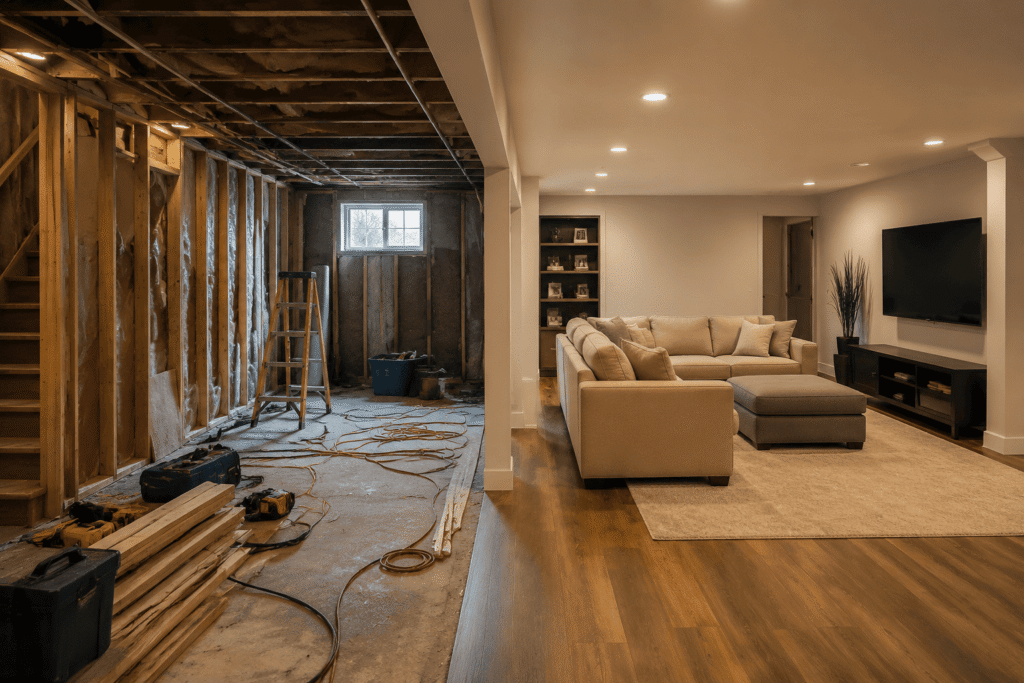

Basement remodeling can provide additional living space, increase property value, and improve the quality of a home. Any one of those spaces- a family room, home office, guest suite, or entertainment area- can become one of the most valuable areas in a house with a finished basement. However, avoiding common basement remodeling mistakes is important to ensure your newly transformed space remains comfortable, safe, and durable for years to come.
Still, too many homeowners underestimate the complexity of basement projects, only to wind up making mistakes due to improper planning that can cost you comfort, safety, and durability down the road. As residential renovation specialists at Timco Builders, we have to admit that we have seen pretty much every pitfall and property that a home renovation can run into.
The good thing is that most basement issues are preventable. Discovering the top mistakes before construction begins can potentially save time, money, and frustration throughout the remodeling process.
Ignoring Moisture Problems
Among the most serious basement finishing problems is neglecting moisture before any construction activities.
Considerably, basements experience more humidity than other areas of the house. The small issue of water intrusion may not appear to be a big deal until after the drywall, flooring, and insulation are installed.
Although most have been around for decades, resistive and inductive heat can be slow to react, so they may not offer protection against thermal overload or signs of moisture issues before damage is done; teach students to look for some examples of:
- Damp odors
- Water stains
- Condensation on walls
- Efflorescence on concrete surfaces
- High humidity levels
Addressing issues of moisture before remodeling can save homeowners from expenses down the road.
Overlooking Waterproofing Needs
Due to the fact that their cellar has never flooded, many property owners think waterproofing and a crawl area is excessive.
However, this is a mistake that results in costly basement waterproofing problems later on.
Changes in weather patterns, drainage issues, foundation settlement, and aging building materials can lead to water intrusion. Repairing a finished basement that has suffered from water damage can be much more expensive.
Poor Space Planning
Basements should be designed for present-day usage and the future
Other owners end up really only thinking about looks, but not the use of the space. This leads to layouts that are awkward, storage that isn’t enough, or a bed-and-breakfast retreat altogether assembled with rooms not aimed at their long-term goals.
In the planning process, consideration of traffic flow, furniture arrangement, and utility access is crucial; space also needs to be flexible enough for future growth or changes in use. A great design makes a more efficient space to live in, giving new purpose and meaning to every square foot.
Inadequate Lighting Design
A common basement renovation mistake is to use just one lighting source over the entire space and not create a layered plan for lighting.
Well-designed basement lighting may include:
- Recessed ceiling lighting
- Accent lighting
- Task lighting
- Wall-mounted fixtures
- Under-cabinet lighting
The correct lighting can make the space feel less oppressive or gloomy.
Wrong Material Selection
Not all types of building materials are suited for below-grade environments.
Basements can be a little more prone to moisture damage, so materials that work perfectly in other areas of the home may not fare so well.
Choose flooring, insulation, wall systems, and trim materials appropriate for the conditions in a basement. Most of the moisture-resistant products provide better durability and long-term performance.
Selecting materials that are appropriate for the project’s use helps minimize maintenance and extends how long the renovation will last.
Conclusion
With proper planning, moisture control, realistic budgeting, and some good professional guidance, avoiding basement remodeling mistakes can be a breeze. Realising potential problems before the construction starts allows homeowners to have a finished basement that will be usable, functional, and stand up to the test of time.
Learning about these 5 common barriers to home renovation will deliver maximum value from your renovation project, whether you’re planning to create a family room, home office, fitness area, or entertainment space.
Frequently Asked Questions
Is it normal if basements often feel damp or humid even in the absence of obvious leaks?
Yes. Being below grade, basements will naturally hold more moisture than upper levels. It is often the case that an area of the building experiences high humidity levels without visible evidence of water infiltration, and this needs to be treated before finalising the space.
What is the best flooring for a basement?
A lot of basement-ready flooring products, like luxury vinyl plank, engineered as well as porcelain tile and vinyl sheets, can stand up to any moisture found in a basement. Creme brulee is always one for pouring on the ambience.
Should I finish my basement if there is a minor water seepage in my home?
For almost all remodels best to address any water intrusion issues before starting the remodel. But if there is only a small leakage, in the long run, this can very quickly lead to destructive consequences for finishing materials.
How much extra should I plan for unexpected issues during a basement renovation?
Reasonably, a good number of contractors recommend that an additional 10% to 20% of your budget be set aside for any unforeseen conditions that come up in construction.
Should you finish a basement to increase home equity?
In many markets, a professionally finished basement provides more usable living space, adds to the overall appeal of the property, and can be a selling feature when it’s time to resell.